The AI revolution in credit will be hyper-personalization
Reflections from the CEO on Avra's starting point — and on why the right question in credit is no longer whether to lend, but under what conditions the operation makes sense for the company at that moment.
- Viviane MeisterCo-founder, CEO
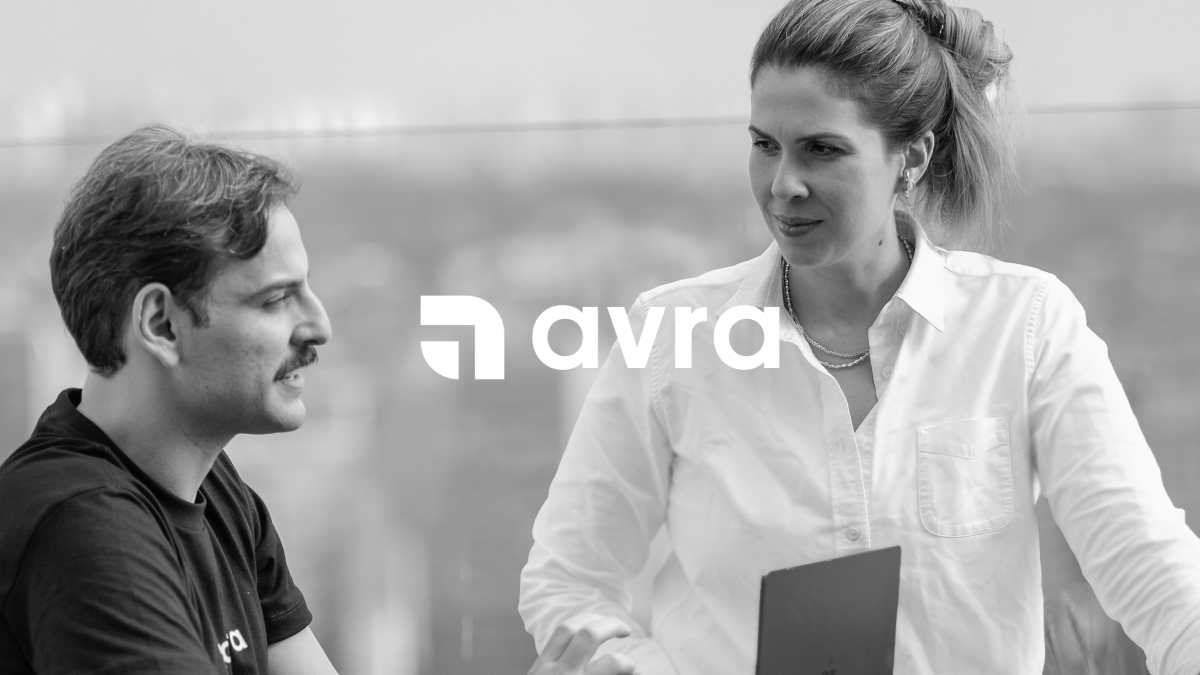
In 2007, I began my first internship in the credit field — at the time, with a rating agency. After that, I spent the next ten years working in credit (Corporate & FIs) at various Brazilian institutions.
What I heard as a common denominator was that granting credit required “bank-hours.” In a literal translation, this meant that a good credit analyst needed many “hours” of experience: to have lived through crises, crop failures, price shocks, and the devaluation and appreciation of the local currency, and so on. All of that made perfect sense, until… the world changed, and AI began to enter every field, acting as a catalyst for how we do everything.
Even in a world where AI has transformed how we research what we don’t know, make a medical diagnosis, or write texts, I notice that something remains almost untouched: the way we grant credit (or how we sell on credit, which, after all, is also a credit decision).
When Bruno and I started Avra, we knew that credit decisions were still being made every day in a nearly binary way: should I lend money to that client or not?
In our view, that isn’t the main question. The main question should be: under what conditions — in terms of term, credit limit, collateral, spread, or profitability — does that operation make sense for the company at that moment?
Boom: that’s where a still very new concept in credit comes in — hyper-personalization. From this angle, the most important question becomes under what conditions do we have an optimal offer, or better yet — how does this optimal offer impact the “next best action”?
Last week, I had a chat with the credit director of a large Brazilian enterprise, and she mentioned how hyper-personalization had helped to very positively catalyze the financial results for the group.
Finally, in an environment of rising interest rates and Basel III standards, the need to lend money more efficiently by using innovations like hyper-personalization becomes even more apparent.
- Platform · Sep 4, 2026
LLMs vs. RFM: why ChatGPT can't predict your customer's next move
LLMs read, summarize, and reason over language, but they can't tell you which customer will churn or default. Why prediction over structured business data needs a different kind of foundation model.
- Research · Aug 21, 2026
Graph foundation models in production
Part 3 of a three-part series on Avra's Graph Foundation Models: the measured performance gains from a live client deployment — where relational embeddings were the single largest driver of improvement — and what we're building next.
- Research · Aug 11, 2026
Inside the Graph Foundation Model
Part 2 of a three-part series on Avra's Graph Foundation Models: why heterogeneous graph neural networks, what the proprietary Large Knowledge Graph is, and the engineering decisions behind the model — Matryoshka embeddings, sampling at scale, and hard constraints.